

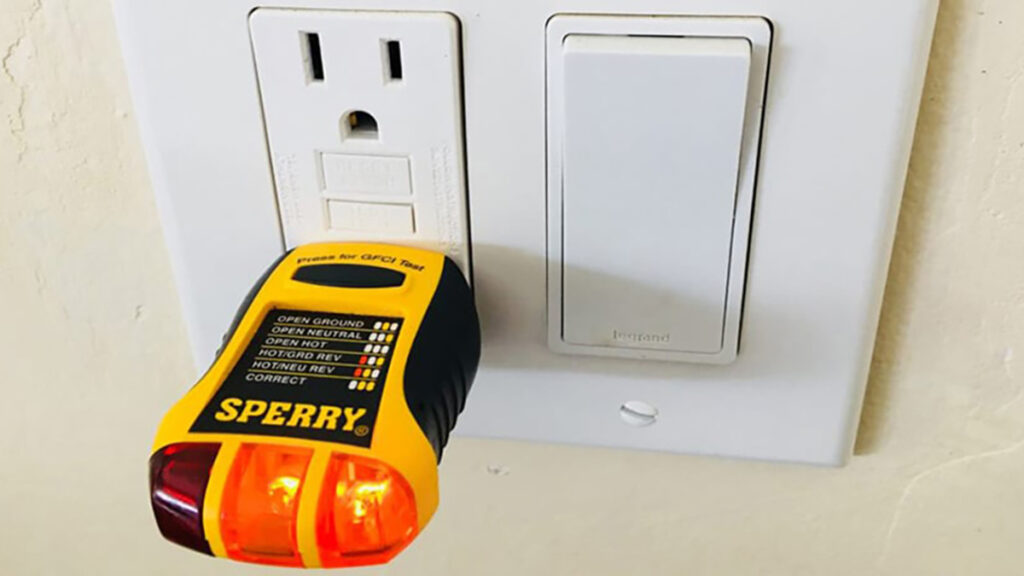
If you’ve ever walked into your kitchen or bathroom and suddenly found an outlet that stopped working, you’re not alone. I see this all the time during home inspections.
A homeowner will point to an outlet and say something like, “This one’s dead. I think the wiring is bad.”
I’ve lost count of how many times a homeowner has told me an outlet suddenly stopped working. In many cases the problem turned out to be a tripped GFCI somewhere else in the house. It’s a surprisingly common issue, and fortunately it’s usually easy to diagnose.
In many cases, though, the wiring is perfectly fine.
More often than not, the real cause is a tripped GFCI outlet somewhere on the circuit.
Over the past two decades as a Certified Master Inspector, I’ve found GFCI outlets in just about every situation imaginable. I’ve seen them hidden behind storage boxes in garages, buried in crawl spaces, installed upside down behind washing machines, and mounted outdoors where they take the full force of rain and humidity.
When they stop working, people understandably get frustrated.
But here’s something I always explain to my clients during inspections:
When a GFCI trips, it’s usually doing exactly what it was designed to do — protect you from electrical shock.
The key is understanding why it tripped and how to diagnose the problem safely.
Let’s walk through how to troubleshoot a GFCI outlet the same way I would during a home inspection.
Key Takeaways:
- A GFCI outlet not working is a safety issue. The GFCI trips when it detects a dangerous electrical imbalance that could cause electrical shock.
- One GFCI outlet can control several other outlets downstream in your home.
- Moisture is the most common cause of nuisance GFCI trips.
- Most GFCI outlets last about 10–15 years before needing replacement.
- If your GFCI repeatedly trips or will not reset, the outlet itself may be functioning as intended and a ground fault exists.
- If no ground fault exists, the GFCI outlet may be worn out or faulty.
What a GFCI Outlet Actually Does
A Ground Fault Circuit Interrupter, or GFCI, is designed to prevent electrical shock.
It constantly monitors the electrical current flowing through the hot and neutral wires. If even a small amount of electricity leaks away — typically just a few milliamps — the outlet shuts off the power instantly.
This usually happens in less than one-tenth of a second.
That may sound dramatic, but it’s exactly what makes GFCIs such an important safety device.
Electricity and water are a dangerous combination, and ground faults can occur in places where moisture is present. That’s why building codes require GFCI protection in areas like:
- Bathrooms
- Kitchens
- Garages
- Crawl spaces
- Unfinished basements
- Outdoor outlets
In other words, the places where people are most likely to encounter electricity while standing on wet surfaces.
When a GFCI outlet trips, it doesn’t necessarily mean something is broken. Often it simply means the device detected something unsafe and shut the circuit down.
The Quick Troubleshooting Checklist
Before assuming the outlet is bad or the wiring is faulty, I always recommend starting with a few simple checks.
You might be surprised how often the problem turns out to be something easy.
| Problem | Likely Cause | Fix |
|---|---|---|
| Outlet won’t reset | Upstream GFCI tripped | Check other outlets |
| GFCI keeps tripping | Moisture or appliance | Unplug devices |
| Blinking red light | Failed self-test | Replace outlet |
| Reset but no power | Wiring issue | Inspect connections |
Step 1: Press the Reset Button
This sounds obvious, but it’s worth trying first.
GFCI outlets have two buttons on the face:
TEST
RESET
If the outlet has tripped, the reset button may be popped out.
Press it firmly.
Sometimes the button requires a little more pressure than people expect. If it clicks into place and stays in, the outlet should restore power immediately.
If the button won’t stay in, that tells us something else is happening on the circuit.
Step 2: Check the Circuit Breaker
A GFCI outlet cannot reset if the circuit breaker has tripped.
Go to your home’s electrical panel and check the breakers.
A tripped breaker may appear:
- halfway between ON and OFF
- slightly out of alignment with the others
If you see one that looks suspicious, flip it fully OFF, then back ON.
I often recommend doing this even if the breaker appears normal. Occasionally breakers look on but have actually tripped internally.
Step 3: Look for Another GFCI Outlet
This is where things often get confusing for homeowners.
One GFCI outlet can protect multiple outlets downstream on the same circuit.
For example, the GFCI in your garage might protect outlets in:
- a bathroom
- a laundry room
- an outdoor wall
I’ve seen homeowners replace perfectly good outlets because they didn’t realize a GFCI somewhere else had tripped.
During inspections, I often walk through the house pressing reset buttons in several locations before declaring an outlet truly dead.
Common places to check include:
- bathrooms
- garages
- exterior outlets
- under kitchen sinks
Sometimes the controlling outlet is in a location you wouldn’t expect.
Step 4: Unplug Everything on the Circuit
If the outlet resets but immediately trips again, unplug any devices connected to outlets on that circuit.
Appliances sometimes develop small electrical leaks that trigger the GFCI.
Common culprits include:
- refrigerators
- coffee makers
- sump pumps
- washing machines
Once everything is unplugged, try resetting the outlet again.
If it stays on, plug devices back in one at a time until you identify the problem.
Why GFCI Outlets Trip in the First Place
If your outlet resets but keeps tripping later, something on the circuit is causing the device to detect a ground fault.
Here are the most common causes I see during home inspections.
Moisture and Humidity
In my experience inspecting homes along the South Carolina coast, moisture is easily the most common cause of nuisance GFCI trips. Outdoor outlets, garage outlets, and bathroom receptacles are especially vulnerable because humidity and water exposure slowly affect the internal components.
Moisture is easily the most common cause of GFCI trips. This happens frequently in:
- bathrooms
- outdoor outlets
- garages
- kitchens
Even humidity alone can sometimes trigger sensitive outlets.
In coastal areas like South Carolina, where I inspect many homes, salty air and condensation can accelerate corrosion inside electrical boxes.
That alone can cause nuisance trips.
Faulty Appliances
Sometimes the issue isn’t the outlet at all.
Appliances can develop small electrical leaks over time.
Common examples include:
- refrigerators
- sump pumps
- washing machines
- dishwashers
When the motor starts or the heating element activates, the GFCI detects the imbalance and trips.
Overloaded Circuits
Plugging too many devices into one circuit can also cause problems.
Hair dryers and space heaters are especially demanding on electrical circuits.
If several appliances are running at once, the GFCI may trip to prevent overheating or electrical faults.
Damaged Wiring
Loose wiring or deteriorated insulation inside walls can also cause ground faults.
This is less common, but when it happens the GFCI is performing its job correctly by shutting off power.
In those cases, further investigation may be needed.
What the Indicator Lights on a GFCI Outlet Mean
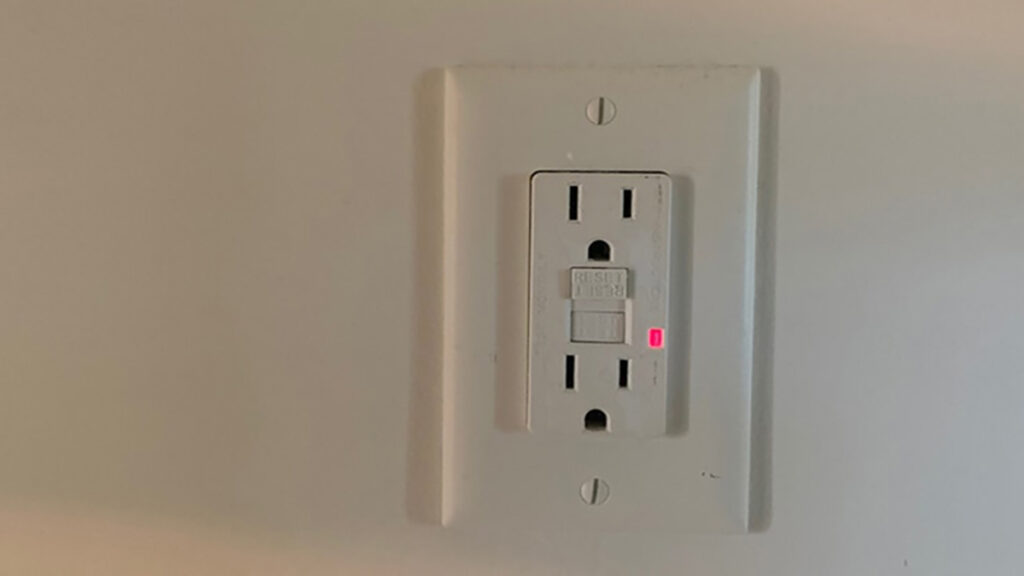
Many newer GFCI outlets include self-testing electronics and indicator lights that help diagnose problems.
If you’ve noticed a green light, red light, or blinking red light, the outlet is trying to communicate its status.
Understanding these lights can often tell you immediately whether the outlet is functioning properly or needs replacement.
Green Light
A steady green light usually means the outlet is operating normally and providing ground-fault protection.
In other words, the device is powered and working as intended.
Not all outlets include indicator lights, especially older models, so the absence of a light doesn’t automatically mean there’s a problem.
Solid Red Light
A solid red light typically indicates that the outlet has failed its internal self-test.
Modern GFCI outlets periodically test their own internal circuitry. If the outlet detects a failure, it may lock itself out to prevent unsafe operation.
When this happens, the outlet should be replaced.
This feature was introduced in newer models after updates to electrical standards requiring self-testing GFCI outlets.
Blinking Red Light
A blinking red light is another sign that the outlet has detected a fault.
In many cases this means:
• the internal protection circuitry has failed
• the outlet can no longer provide shock protection
Some outlets will refuse to reset once this condition occurs.
At that point the safest solution is simply replacing the device.
No Light at All
If your GFCI outlet has no indicator lights, there are a few possible explanations.
The outlet might be:
• an older model without lights
• not receiving power from the breaker
• damaged internally
Start by checking the breaker and other GFCI outlets in the house before assuming the device has failed.
Signs the GFCI Outlet Itself Is Bad
During inspections I occasionally find GFCI outlets that have simply reached the end of their lifespan. Many homeowners are surprised to learn these devices don’t last forever. After 10 to 15 years the internal sensor and components can wear out and the outlet may begin tripping repeatedly or refuse to reset.
While GFCI outlets are designed to protect people, they do eventually wear out. In fact, many manufacturers estimate a lifespan of about 10 to 15 years.
Environmental conditions can shorten that lifespan considerably.
I’ve seen outlets fail much sooner in places like:
- garages
- outdoor outlets
- crawl spaces
- bathrooms with high humidity
Here are some signs the outlet itself may be defective.
The Reset Button Won’t Stay In
One of the most common failure signs is a reset button that won’t remain engaged.
If you press the reset button and it immediately pops back out, the outlet may have detected a fault or the internal mechanism may be worn out.
The Outlet Trips Repeatedly
If the outlet resets successfully but continues to trip again and again without a clear cause, the device itself may be failing.
Occasional trips are normal.
Constant trips are not.
The Outlet Feels Warm
Electrical outlets should never feel warm to the touch.
If a GFCI outlet feels warm or you smell burning plastic, turn off power at the breaker and investigate further.
The Outlet Still Has Power When Tripped
This is a rare but dangerous failure.
Sometimes older outlets fail in a way where the outlet continues providing power even after the test button is pressed.
In that case, the outlet is no longer providing shock protection.
When I see this during inspections, I always recommend immediate replacement.
How to Test a GFCI Outlet
Testing a GFCI outlet is simple and something homeowners should do occasionally to make sure the device is still functioning. Most people are unaware, but you should test for GFCI outlets once a month.
Most outlets include a built-in test button.
Step 1: Press the TEST Button
Press the TEST button on the outlet.
The RESET button should pop out, and power should be cut off to the outlet.
Step 2: Plug in a Small Device
Plug in a lamp or small device to confirm that the outlet no longer provides power.
If the lamp remains on, the outlet has failed its safety function.
Step 3: Press RESET
Press the reset button again.
Power should be restored to the outlet.
If the outlet fails any part of this test, it should be replaced.
During professional inspections we often use specialized outlet testers that simulate ground faults to verify proper operation.
Why One GFCI Outlet Can Shut Off Multiple Outlets
One thing that often confuses homeowners is that a single GFCI outlet can protect several other outlets on the same circuit.
One thing that surprises homeowners during inspections is how many outlets can be controlled by a single GFCI device. I’ve seen a garage outlet trip and shut down power to multiple bathroom outlets and even exterior receptacles.
This happens because outlets are often wired in what electricians call a daisy chain. The first outlet in the chain provides protection for all outlets connected downstream.
For example, a GFCI outlet in the garage might protect:
- the bathroom outlets
- outdoor outlets
- basement outlets
When the GFCI trips, power shuts off to all of those outlets.
That’s why a seemingly unrelated outlet may stop working at the same time.
When You Should Replace the GFCI Outlet
If troubleshooting doesn’t resolve the issue, replacing the outlet may be the best solution.
Consider replacing the outlet if:
• it is more than 10–15 years old
• the reset button will not stay in
• the outlet repeatedly trips without explanation
• indicator lights show internal failure
GFCI outlets are relatively inexpensive compared to the safety protection they provide.
Replacing an aging outlet is often a wise preventative step.
GFCI Won’t Reset but Breaker Isn’t Tripped
Sometimes the reset button refuses to stay in even though the breaker is on.
This usually means one of three things:
- another GFCI outlet upstream has tripped
- a connected appliance is causing a ground fault
- the outlet itself has failed internally
Start by unplugging devices on the circuit and checking nearby GFCI outlets before assuming the device is bad.
GFCI Reset but No Power to the Outlet
If the outlet resets but still doesn’t provide power, the issue may involve the load terminals.
When GFCI outlets are wired incorrectly, downstream outlets may lose power even though the GFCI appears normal.
Loose wiring connections can also cause this issue.
Why a GFCI Trips When It Rains
Exterior outlets frequently trip after heavy rain.
This usually means moisture is entering the electrical box.
Outdoor outlets should have weatherproof in-use covers that protect the outlet even when something is plugged in.
During inspections I often recommend replacing damaged covers to prevent this problem.
When to Call an Electrician
Some electrical problems require professional evaluation.
Contact a qualified electrician if:
• the breaker or receptacle repeatedly trips
• the outlet sparks or smells like burning
• wiring inside the box appears damaged
• you are unsure about line and load connections
Electricity should always be treated with respect, and when in doubt it’s better to seek professional help.

Get FREE estimates from licensed electricians in your area today. Whether you need to replace an outlet, hang a ceiling fan, a new electrical panel, or repair wiring, We Can Help!

When a GFCI Won’t Reset at All
One of the more frustrating situations homeowners run into is when a GFCI outlet simply refuses to reset.
You press the reset button and it immediately pops back out.
When that happens, something on the circuit is preventing the outlet from restoring power.
Here are the most common reasons I encounter during inspections.
Another GFCI Has Tripped Upstream
Sometimes the outlet you’re trying to reset isn’t actually the first device on the circuit.
Another GFCI outlet may exist somewhere else in the home.
I’ve seen this happen many times during inspections. A homeowner assumes the bathroom outlet is bad, when in reality the controlling GFCI was installed in the garage or laundry room.
Walk through the house and check:
- garage outlets
- outdoor outlets
- basement outlets
- bathroom outlets
Reset any GFCI outlets you find.
The Circuit Breaker Has Tripped
If the circuit breaker is off, the GFCI outlet will not reset.
Check your electrical panel and confirm the breaker is fully switched to the ON position.
Even if it appears on, flip it OFF and back ON again.
Line and Load Wires Are Reversed
GFCI outlets have two sets of terminals.
Line terminals bring power into the outlet.
Load terminals send power to outlets downstream.
If these wires are reversed, the outlet may not function properly and may refuse to reset.
This is a wiring mistake I occasionally encounter during inspections when outlets have been replaced incorrectly.
The Outlet Has Reached the End of Its Life
Sometimes the outlet itself has simply worn out.
Like any electrical device, the internal components degrade over time.
If the outlet is older and will not reset despite proper power, replacement is usually the simplest solution.
Advanced Issues Inspectors Occasionally Encounter
Most homeowners never run into these situations, but they do come up during inspections from time to time.
Understanding them can help explain some unusual electrical behavior.
Bootleg Grounds in Older Homes
In older homes that lack grounding wires, electricians sometimes install GFCI outlets as a safer alternative.
Electrical codes allow this under certain conditions as long as the outlet is labeled “No Equipment Ground.”
While this improves safety compared to an ungrounded outlet, it can confuse homeowners who expect grounded outlets.
Backstab Wiring Failures
Some outlets are installed using push-in wiring connections, commonly called backstab connections.
Over time these connections can loosen and create intermittent electrical problems.
This can cause outlets to appear dead even though the breaker is still on.
During inspections I occasionally recommend replacing outlets with properly secured screw terminal connections.
Outdoor Outlet Damage
Exterior outlets are exposed to weather, insects, and moisture.
If the protective cover is missing or damaged, water can enter the electrical box and cause repeated GFCI trips.
Outdoor outlets should always have weatherproof “in-use” covers that protect the outlet even when something is plugged in.
How to Prevent GFCI Problems
While GFCI trips are sometimes unavoidable, a few maintenance steps can reduce nuisance trips.
• Keep outdoor outlet covers in good condition
• Replace aging outlets every 10–15 years
• Avoid plugging high-draw appliances into the same circuit
• Test GFCI outlets monthly using the test button on the outlet or breaker
Frequently Asked Questions
Why won’t my GFCI outlet reset?
If your outlet will not reset, the most common reasons include:
• another GFCI outlet has tripped upstream
• the circuit breaker has tripped
• a connected appliance is causing a ground fault
• the outlet itself has failed
Why does my GFCI trip when it rains?
Rainwater or moisture may be entering an exterior outlet box. This commonly happens when outdoor outlets lack weatherproof covers or when the seal around the electrical box has deteriorated.
Can a refrigerator trip a GFCI outlet?
Yes, it can. Some refrigerators leak small amounts of electrical current when the compressor starts. This can trigger the GFCI protection.
Does one GFCI outlet protect multiple outlets?
Absolutely. If the outlet is wired using the load terminals, it may protect all outlets connected downstream on that circuit.
How long do GFCI outlets last?
Most GFCI outlets last 10 to 15 years. Outlets installed in harsh environments such as garages or outdoor locations may fail sooner.
Can I replace a GFCI outlet myself?
If you are comfortable working with electrical wiring and shut off power at the breaker, replacing a GFCI outlet is possible. However, if the wiring configuration is unclear or multiple wires are present, it’s best to consult a qualified electrician.
Why does my GFCI trip randomly?
Random trips usually indicate moisture, appliance leakage, or a deteriorating outlet. Repeated unexplained trips may mean the outlet is nearing the end of its lifespan.
How many outlets can one GFCI protect?
A single GFCI outlet can protect all outlets connected downstream on the same circuit. In some homes this may include several outlets in bathrooms, garages, or outdoor areas.
Final Thoughts
Electrical safety devices like GFCI outlets are designed to protect people from serious injury.
When one stops working, it’s easy to assume something major is wrong with the wiring.
In reality, most GFCI issues are caused by simple things like moisture, a tripped breaker, or an appliance creating a ground fault.
During home inspections, I remind clients that a tripped GFCI is often a sign the device is doing exactly what it was designed to do.
Taking a few minutes to troubleshoot the outlet can often solve the problem quickly and safely.
And if the outlet truly has reached the end of its life, replacing it is a small investment that provides an important layer of electrical protection for your home.